Worldwide Retention Dynamics in Prize Draw Systems: Analyzing Formats and Strategic Game Choices

Retention patterns in prize draw systems reveal consistent trends across regions and formats, with data collected through June 2026 indicating measurable differences in how participants remain engaged depending on draw structure and game options. Researchers tracking these systems note that daily entry formats often sustain shorter participation cycles compared to cumulative leaderboard approaches, while game selection influences drop-off rates in predictable ways according to multiple industry reports.
Format-Specific Retention Metrics
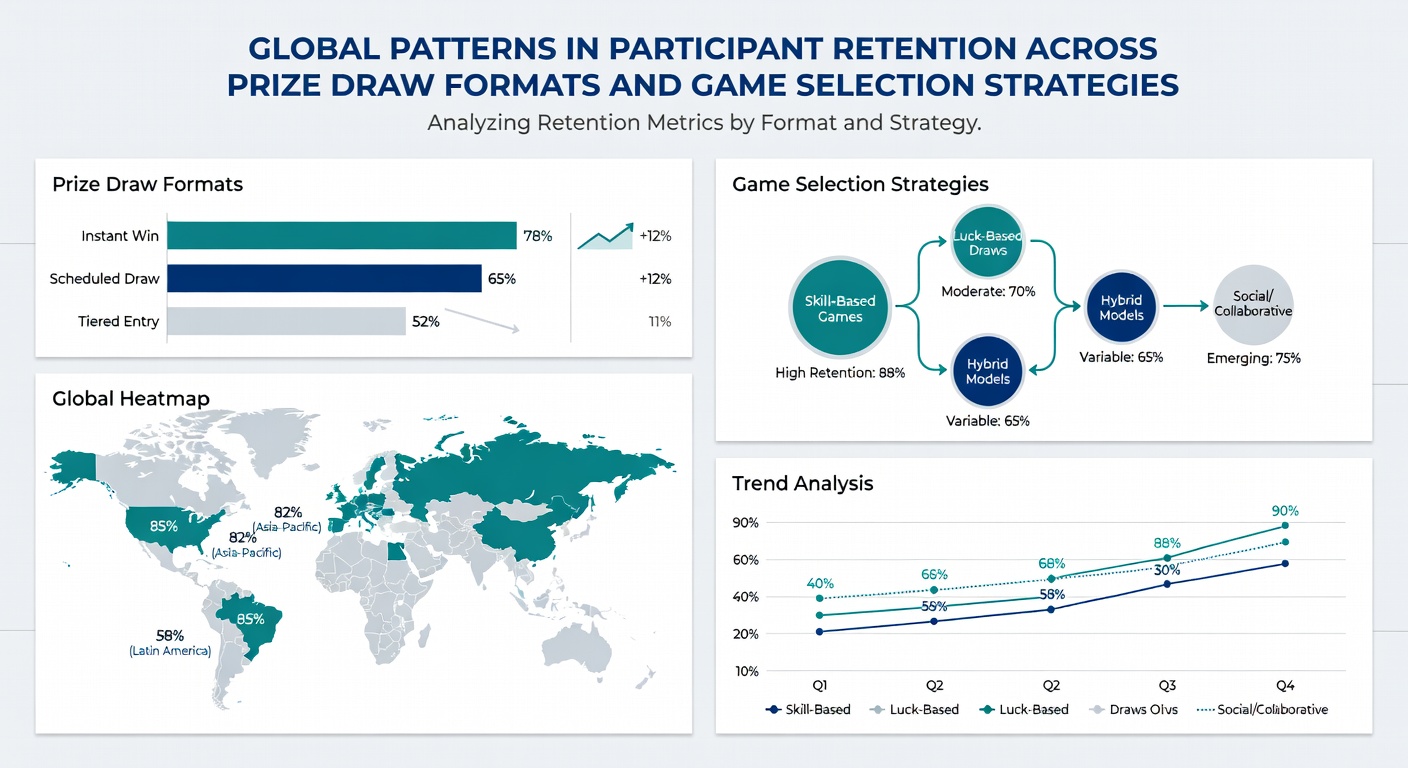
Daily prize draws generate high initial sign-ups yet experience steeper declines after the first week, whereas multi-day accumulation events maintain steadier involvement over longer periods; figures from international tracking platforms show retention rates holding above 60 percent at the 30-day mark for cumulative formats but falling below 40 percent for single-day structures. Observers note that instant-win mechanics paired with ongoing leaderboards create repeated entry points that encourage return visits, while fixed-schedule draws without progression elements tend to lose participants once the initial prize window closes. Data collected across North American and Asian markets during the first half of 2026 demonstrates these patterns hold regardless of prize value, pointing instead to structural features as primary drivers.
Regional Variations in Participation Longevity
North American platforms report higher retention when prize draws incorporate regional game preferences such as classic reel titles, while European operators see stronger continuation rates with progressive jackpot integrations; a study released by the Australian Gambling Research Centre in early 2026 highlighted that participants in Oceania markets respond particularly well to hybrid formats combining daily qualifiers with monthly grand draws. Canadian regulatory summaries similarly indicate that selection of low-volatility games correlates with extended engagement periods, whereas high-volatility options produce quicker exits after initial wins or losses. These geographic distinctions emerge from localized player data sets rather than universal rules, yet the underlying connection between format design and sustained activity remains evident across borders.
Game Selection Strategies and Their Impact
Participants who strategically rotate between multiple game types within the same prize draw ecosystem demonstrate longer retention spans than those who focus on single titles, according to aggregated platform analytics updated through June 2026. Low to medium volatility selections paired with frequent small wins appear to anchor users more effectively than pure high-volatility choices, which often produce burst activity followed by rapid disengagement. One analysis of sweepstakes-style competitions found that users granted access to 15 or more game options retained at rates 25 percent higher than those limited to five or fewer selections, suggesting variety itself functions as a retention tool independent of individual game mechanics. Industry groups such as the European Gaming and Betting Association have compiled comparable findings from operator submissions, reinforcing that deliberate curation of game libraries influences how long entrants stay active.
Data Trends Emerging in Mid-2026
Tracking systems deployed across multiple continents captured notable shifts during spring and early summer 2026, with retention curves flattening in regions that introduced tiered entry requirements allowing partial progress to carry forward between events. Platforms offering seamless transitions between free and paid competition tiers recorded improved month-over-month continuation, while those maintaining strict separation between formats saw more pronounced drop-offs at each boundary. Researchers examining these patterns emphasize that external factors such as payment processing speed and mobile accessibility also contribute, yet format architecture and game variety remain the most controllable variables for operators seeking to stabilize participant numbers.
Strategic Implications for Platform Design
Operators reviewing retention statistics increasingly adjust prize draw calendars to interleave short-cycle daily events with longer accumulation periods, creating overlapping engagement windows that reduce the likelihood of complete disengagement during transition phases. Game libraries undergo regular evaluation to ensure a balance of volatility levels, with data indicating that maintaining at least three distinct volatility categories supports broader retention across demographic segments. Reports from the National Council on Problem Gambling underscore the value of transparent rules and consistent reward visibility, elements that indirectly support retention by building user confidence in the overall system. These adjustments reflect responses to observed behavioral data rather than theoretical models, with real-time dashboards enabling rapid iteration based on live retention metrics.
Conclusion
Global patterns in participant retention across prize draw formats and game selection strategies continue to evolve as platforms refine their approaches based on accumulating evidence through 2026. Structural choices around draw frequency, progression mechanics, and available game options produce measurable effects on how long entrants remain active, with regional data sets confirming both shared trends and localized distinctions. Continued monitoring of these variables provides operators and researchers with concrete information for refining competition frameworks while maintaining engagement across diverse participant groups.