Offer Architectures Driving Engagement in Worldwide Digital Leaderboard Systems
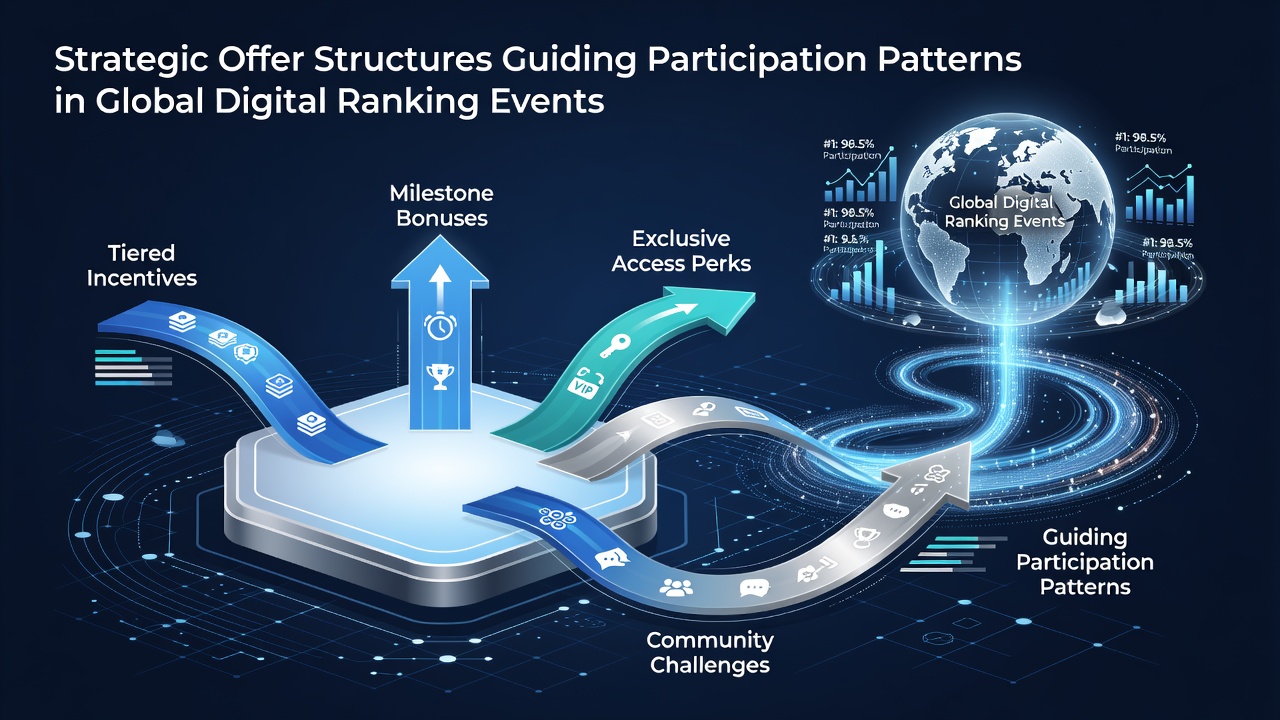
Digital ranking events have expanded rapidly across platforms that host competitive formats ranging from mobile applications to browser-based tournaments and data from industry trackers shows participation volumes rising steadily through structured reward mechanisms that align user actions with platform goals. These offer architectures combine entry incentives, tiered progression rewards, and time-bound multipliers to steer how participants select events and maintain activity levels over extended periods.
Core Components of Strategic Offer Designs
Platforms implement layered structures that begin with accessible entry points such as free registration bonuses or low-commitment qualifying rounds and then escalate through progressive milestones that unlock additional prize pools or visibility features. Observers note that these designs often incorporate segmentation tactics where new users receive simplified offers while returning participants encounter customized challenges based on prior performance metrics. Such differentiation helps maintain broad appeal without overwhelming any single demographic group.
Time sensitivity plays a central role as well because limited-duration multipliers or bonus entry windows create urgency that correlates with spikes in logins and task completions. Researchers examining platform data across multiple regions have documented how synchronized global events timed to coincide with regional holidays or major sporting calendars produce measurable upticks in cross-border involvement.
Participation Patterns Across Regions
European markets demonstrate higher responsiveness to collective achievement bonuses where group milestones unlock shared rewards while North American platforms tend to emphasize individual progression ladders with visible prestige markers. Data compiled by regulatory bodies including the New Jersey Division of Gaming Enforcement reveals distinct seasonal patterns with summer months showing elevated mobile participation rates tied to flexible scheduling offers. In Asia-Pacific territories operators frequently deploy region-specific currency conversions and localized leaderboards that reduce friction for international competitors.
June 2026 saw several platforms introduce synchronized ranking cycles that aligned with international esports calendars and preliminary figures indicate these coordinated launches generated above-average retention rates among users who previously engaged only sporadically. The structures allowed participants to carry progress across multiple events through persistent profile systems that preserved accumulated points and unlocked status levels.
Influence of Data-Driven Adjustments
Real-time analytics enable operators to refine offer parameters mid-cycle by monitoring drop-off points and adjusting reward thresholds accordingly. One documented approach involves dynamic scaling of prize allocations where under-subscribed categories receive boosted incentives to balance overall engagement distribution. Academic analyses from institutions such as the University of Nevada Gaming Research Center have tracked how these responsive adjustments correlate with more even participation spreads across skill brackets.
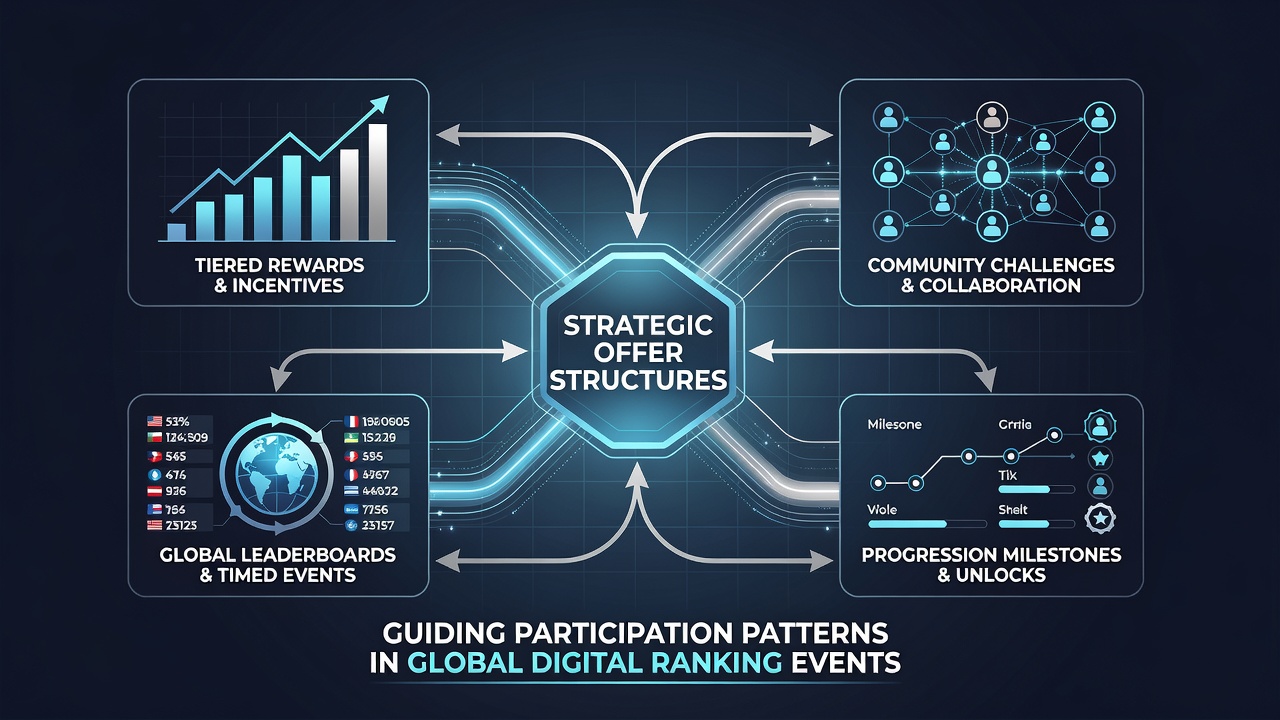
External factors including device accessibility and network stability also interact with offer designs because platforms that provide offline progress tracking or low-data entry options tend to sustain involvement from regions with variable connectivity. Those who've studied user behavior across continents observe that hybrid reward models blending immediate small wins with longer-term prestige incentives maintain steadier activity curves than purely immediate-gratification systems.
Regulatory Frameworks and Structural Adaptations
Government oversight shapes how operators construct these systems with jurisdictions requiring transparent disclosure of odds and prize distribution mechanisms. The Australian Communications and Media Authority has issued guidelines that encourage clear segmentation between promotional offers and core gameplay elements which in turn influences how ranking events present their incentive layers. Compliance requirements have prompted the development of modular offer templates that platforms can adapt quickly when entering new markets without redesigning entire reward architectures.
Industry associations such as the European Gaming and Betting Association have published comparative studies highlighting how harmonized standards across member states reduce administrative overhead while preserving competitive differentiation through localized reward variations. These reports emphasize that effective structures balance regulatory constraints with user expectations for fairness and predictability.
Emerging Trends in Offer Evolution
Integration of cross-platform identity systems now allows participants to transfer status and rewards between related events which extends engagement lifecycles beyond single competitions. Early implementations in 2026 demonstrated increased multi-event participation rates among users who could leverage accumulated achievements across different ranking formats. Machine learning models assist in predicting which offer combinations will resonate with specific cohorts enabling preemptive customization that further refines participation patterns.
What's interesting is how these architectures increasingly incorporate social sharing components where participants earn supplementary points for recruiting new entrants or collaborating on team-based challenges. Such features expand reach while distributing engagement incentives across wider networks rather than concentrating them among core users.
Conclusion
Strategic offer structures continue to evolve as primary levers for guiding participation in global digital ranking events with platforms leveraging segmented incentives, temporal triggers, and data-responsive adjustments to shape involvement patterns. Regional regulatory environments and technological integrations further refine these designs ensuring adaptability across diverse markets. Continued observation of participation metrics will likely reveal additional refinements as operators respond to shifting user behaviors and emerging compliance standards.