Entry Timing Windows Influence Outcomes Across Global Slot Prize Cycles
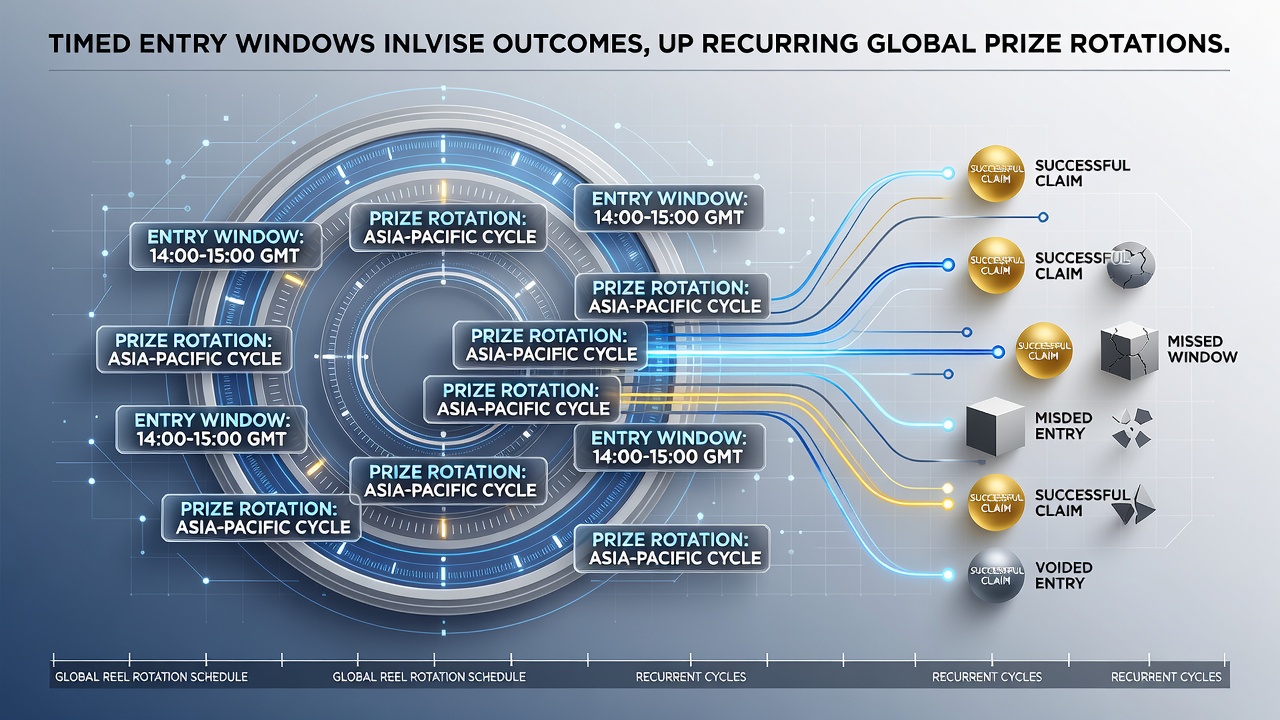
Timed entry windows operate as structured intervals during which participants submit entries for recurring reel prize rotations that cycle through multiple regions each month, and these intervals directly determine which player groups gain access at peak availability periods. Data from international gaming platforms shows that windows opening between 8 PM and midnight UTC capture higher volumes from European and North American time zones while shorter windows in early morning hours shift participation toward Asian markets.
Recurring rotations follow predictable patterns where prize pools reset every 24 to 72 hours and entry access opens in staggered blocks that align with regional peak activity. Operators coordinate these blocks through centralized synchronization systems that adjust for daylight saving transitions and local holidays, which alters the total number of valid submissions per cycle. Research indicates that rotations spanning June 2026 incorporated additional windows to accommodate expanded participation from Australian operators following regulatory updates in New South Wales.
Mechanics of Window Duration and Participation Shifts
Window duration ranges from 15 minutes in high-frequency daily rotations to several hours in weekly events, and shorter durations concentrate submissions among players who monitor alerts closely while longer durations allow broader geographic reach. Platform analytics reveal that 15-minute windows produce entry spikes within the first five minutes followed by rapid decline, whereas four-hour windows distribute entries more evenly across overlapping time zones.
Operators use algorithmic adjustments to balance load across servers during simultaneous regional openings, and these adjustments prevent system congestion that previously delayed submissions in multi-continent events. Those who track submission timestamps note that entries logged in the final seconds of a window sometimes receive priority processing in certain prize draw formats because tie-breaking protocols favor later timestamps when scores match exactly.
Regional Time Zone Effects on Cycle Results
Global rotations must account for differences across more than 20 major time zones, and platforms segment entry access accordingly so that players in Pacific regions receive separate windows from those in Eastern Europe. Canadian regulatory reports highlight that synchronized windows between Ontario and British Columbia increased total entries by aligning with local evening hours rather than relying on a single worldwide block.
Time zone misalignment previously reduced outcomes for participants in Australia and New Zealand when windows closed before their morning hours began, yet updated scheduling in 2026 introduced dual morning and evening slots that lifted participation rates from those markets. Industry tracking data shows that rotations with offset windows achieve more consistent prize distribution across continents compared with uniform global openings.

Data Patterns in Submission Timing and Prize Allocation
Studies from the University of Nevada Gaming Research Center demonstrate that entries submitted during the middle third of a window correlate with higher average scores in reel-based competitions because participants avoid both the initial rush and the final deadline pressure. Figures reveal that late-window submissions often come from mobile users who join after receiving push notifications, which changes the demographic profile of winners in rotations that previously favored desktop players active during early segments.
Recurring cycles repeat these patterns monthly, and operators refine window lengths based on historical entry velocity metrics collected across previous rotations. Platforms report that adjusting window starts by 30 minutes in either direction can shift winner distribution by up to 18 percent when measured against fixed rotation benchmarks.
Technical Synchronization Across International Platforms
Centralized databases track entry validity in real time and close windows automatically once capacity thresholds are reached, which prevents over-subscription in popular prize rotations. European operators coordinate with North American counterparts through shared APIs that enforce consistent rules regardless of local platform branding, and these connections ensure that a participant who enters during an approved window receives credit across all linked systems.
June 2026 updates introduced enhanced latency compensation for regions with variable internet infrastructure, allowing submissions from areas with slower connections to register within the same windows as those from high-speed networks. Observers note that such technical refinements reduce the advantage previously held by players located near primary data centers.
Strategic Considerations for Recurring Rotations
Players who monitor historical window performance data often select rotations whose timing aligns with their availability, and platforms publish anonymized entry graphs that show average submission rates per hour for each cycle. These graphs help participants identify periods when competition density remains lower, which can influence final ranking positions when prize pools remain constant across rotations.
Regulatory frameworks in multiple jurisdictions require transparent disclosure of window schedules at least 48 hours in advance, and operators comply by publishing calendars that list exact opening and closing times for every upcoming rotation. Compliance documentation from the Malta Gaming Authority confirms that published schedules reduce disputes over missed entry opportunities.
Conclusion
Timed entry windows function as core structural elements that determine access patterns and outcome distributions in recurring global reel prize rotations. Synchronization across time zones, duration adjustments, and technical refinements continue to shape how participants from different regions engage with each cycle, while data from 2026 shows measurable shifts in submission timing and geographic representation. These mechanisms remain central to the operational design of international prize events that repeat on fixed schedules.