Entry Requirements and Victory Patterns in Worldwide Free Slot Prize Competitions
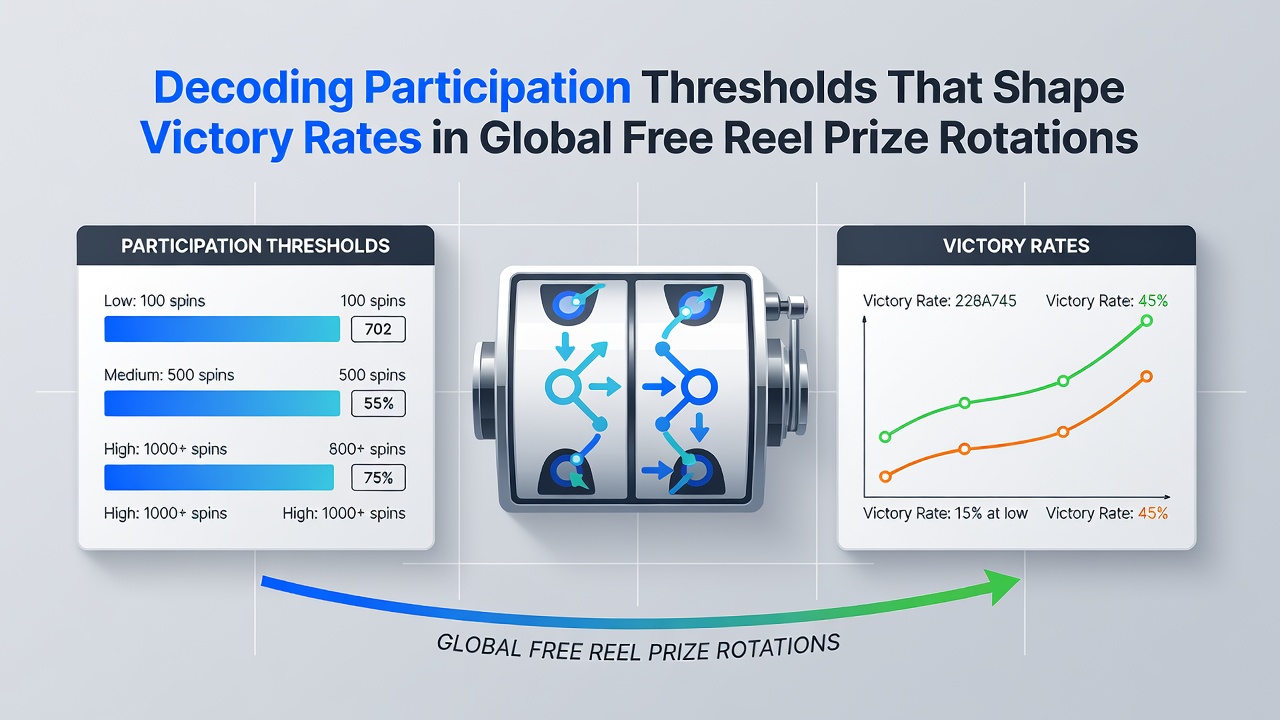
Platforms operating international free reel prize rotations establish specific participation thresholds that directly influence victory rates among entrants, and these benchmarks vary by region, event format, and operator policy. Data from multiple jurisdictions shows that minimum spin requirements, time-based entry windows, and volume commitments create measurable differences in final leaderboard positions.
Defining Participation Thresholds Across Markets
Entry criteria in complimentary slot events typically include a set number of qualifying spins, a minimum active play period, or a combination of both, while operators adjust these levels based on prize pool size and expected participant volume. In July 2026 several major platforms updated their rotation schedules to include tiered thresholds that scale with total entries, allowing smaller groups to compete under adjusted minimums and larger cohorts to face steeper requirements before results finalize.
Analysts tracking these systems note that thresholds function as filters, and those who meet or exceed the stated criteria advance to scoring phases where additional factors such as symbol combinations and bonus round frequency determine final rankings. European operators often publish these rules in advance through centralized portals, whereas North American sweepstakes-style platforms embed the same information within individual game interfaces.
How Threshold Levels Correlate With Success Metrics
Studies of past rotations reveal consistent patterns where participants who surpass the baseline entry count by 20 to 30 percent achieve higher placement rates than those who stop at the minimum, yet teh advantage diminishes once totals exceed certain saturation points. Figures released by industry monitoring groups indicate that victory rates plateau or decline when participation climbs above platform-specific ceilings, because increased competition offsets additional spins completed.
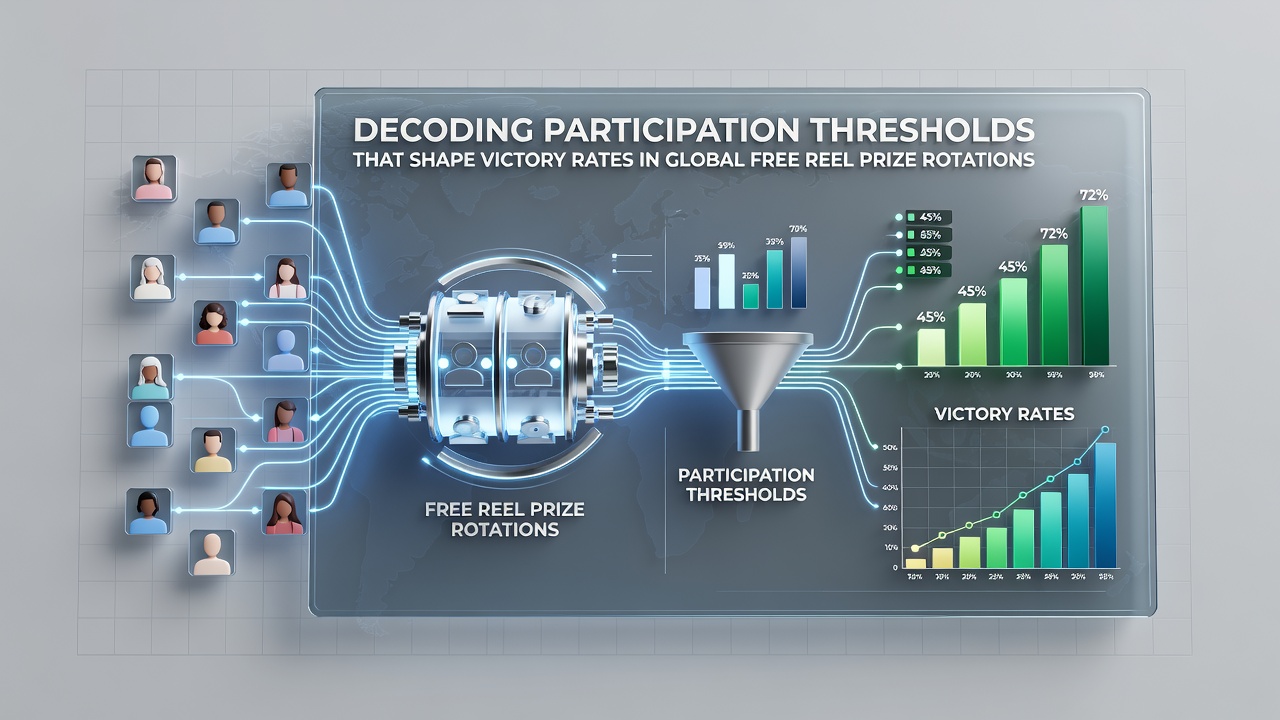
Regional regulatory frameworks further shape these dynamics, and authorities in Australia require transparent disclosure of threshold calculations while Canadian provincial bodies focus on audit trails that verify spin authenticity. Observers tracking cross-border events find that unified thresholds applied across multiple countries produce more predictable victory distributions than fragmented rules that differ by jurisdiction.
Global Data Patterns and Platform Adjustments
Reports compiled by the European Gaming and Betting Association highlight that free reel rotations incorporating dynamic thresholds experience steadier engagement curves throughout the event window, and operators respond by recalibrating minimums mid-cycle when entry numbers deviate from projections. Similar adjustments appear in North American markets where state-level oversight encourages real-time reporting of participation data to maintain fairness standards.
One documented rotation in early 2026 demonstrated that a 15 percent increase in the required spin count reduced overall winner diversity by concentrating prizes among a smaller subset of high-volume participants, and subsequent events incorporated softer scaling formulas to broaden distribution. Researchers examining these outcomes emphasize the role of transparent communication, noting that clear publication of threshold formulas correlates with higher sustained participation across repeated rotations.
Conclusion
Participation thresholds remain central to the structure of global free reel prize rotations, and available evidence demonstrates their direct effect on victory rate distributions across different markets and formats. Continued monitoring by regulatory bodies and industry associations supports ongoing refinement of these benchmarks to align entry requirements with intended competitive balance.