Collective Benchmarks Fuel Continued Engagement in Platform-Based Prize Rotations
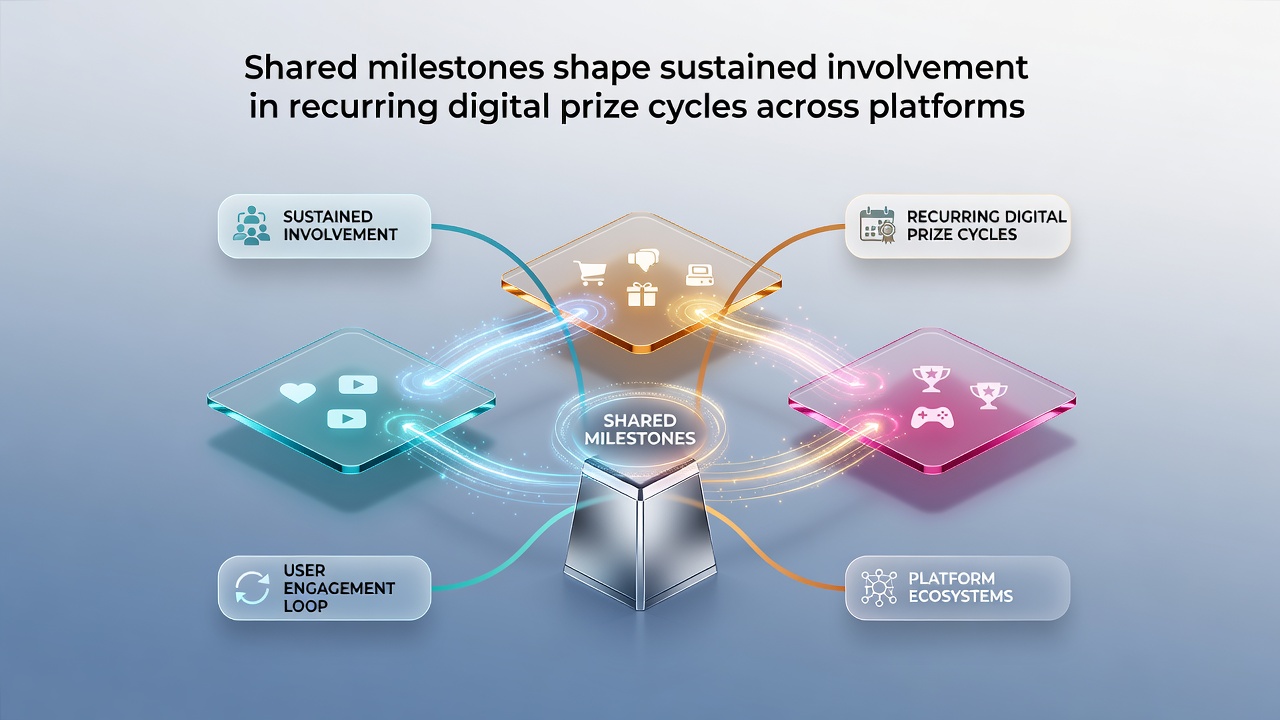
Shared milestones continue to anchor participation patterns in recurring digital prize cycles that span multiple gaming platforms, and data from mid-2026 shows consistent retention lifts when users hit collective targets together. Platforms that synchronize progress markers across leaderboards and entry systems see repeat logins rise, while isolated individual goals produce shorter engagement arcs. Researchers tracking user behavior note that these group-oriented checkpoints create natural return triggers because participants can observe and respond to the same advancement signals in real time.
Mechanics Behind Recurring Prize Structures
Recurring prize cycles operate on scheduled intervals that reset daily, weekly, or monthly, and shared milestones sit at the center of those loops. A milestone might require a combined total of spins across thousands of accounts or a synchronized number of bonus triggers reached by the entire community, and platforms publish live counters so users can monitor proximity to the next reward tier. When the group crosses a threshold, every qualifying account receives entries or credits, which removes the sense of competing against an invisible opponent and replaces it with a visible, shared objective.
Operators integrate these markers into cross-platform ecosystems by linking accounts through unified login systems, allowing progress earned on one site to contribute toward milestones hosted on another. In June 2026, several North American and European networks expanded this model, synchronizing leaderboards so that a user’s activity on a mobile app counted toward the same community goal displayed on desktop and console interfaces. The result appears in aggregated session data: average time between visits shortens when the next collective milestone sits within reach.
Cross-Platform Synchronization and User Retention
Platforms achieve sustained involvement by aligning milestone timing with regulatory reporting windows and seasonal traffic peaks. Data from the Alcohol and Gaming Commission of Ontario indicates that synchronized prize events running across multiple licensed operators produced measurable increases in account reactivation rates during the first half of 2026. Users who previously lapsed after a single cycle returned when they noticed the collective counter advancing toward a new prize pool, because the visible progress supplied an external prompt independent of personal win streaks.
Technical infrastructure supporting these cycles includes real-time APIs that push milestone status to all connected platforms simultaneously. When one network segment experiences heavy traffic, the shared counter accelerates for everyone, creating a feedback loop that rewards simultaneous participation. Observers note that this design reduces platform-switching friction, since users can contribute from whichever interface they prefer without losing accumulated group progress.

Evidence from Industry Reports and Academic Studies
Academic researchers at the University of Las Vegas have examined how milestone visibility affects churn, and their preliminary 2026 findings show lower dropout rates among accounts that receive notifications tied to group achievements rather than solo rankings. The study tracked thousands of accounts across three separate prize cycles and found that the presence of a shared target extended average participation length by several rotation periods. European data collected by the Malta Gaming Authority similarly records higher monthly active user counts when operators publish collective progress metrics alongside standard individual statistics.
These patterns hold across different regulatory environments because the underlying behavioral mechanism remains consistent: users respond to observable movement toward a common reward. Platforms that obscure the group counter or delay updates see participation taper more quickly, whereas transparent systems maintain momentum through the full cycle duration. The difference becomes especially clear during longer monthly rotations, where isolated goals lose salience after the first two weeks.
Practical Implementation Across Regions
Implementation varies by jurisdiction yet follows the same structural logic. Australian operators linked through the National Broadband Network report that milestone-driven events scheduled for June 2026 attracted higher concurrent user numbers than equivalent non-milestone promotions from the prior year. Canadian provincial systems have adopted similar shared counters within their regulated frameworks, allowing participants to view aggregate progress without disclosing individual identities. The common thread is the external reference point supplied by the collective benchmark, which functions regardless of local prize structures or entry requirements.
Operators continue to refine notification timing so that milestone alerts arrive when users are most likely to act, and testing shows that combining these prompts with visible countdowns further extends session frequency. The approach avoids reliance on any single platform’s feature set because the milestone itself travels with the user across linked environments.
Conclusion
Shared milestones have become a documented driver of sustained involvement in recurring digital prize cycles, and evidence from regulatory reports and academic tracking confirms their role in extending participation across platforms. As networks expand synchronization capabilities in 2026, the pattern suggests continued reliance on collective benchmarks to maintain engagement loops that individual achievements alone do not sustain. Platforms that keep these markers visible and accessible across devices position themselves to capture repeat activity through the entire rotation period.