Calendar Cycles Driving Entry Distribution Across Global Digital Reel Prize Events
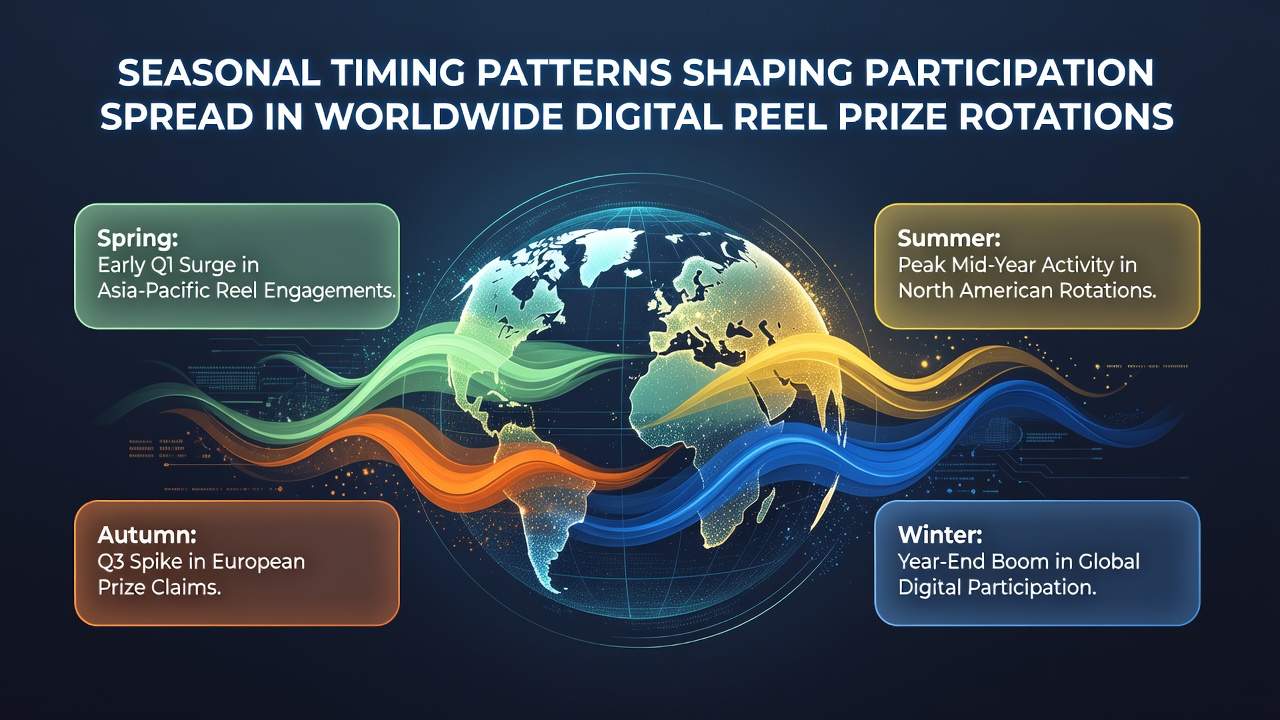
Seasonal timing patterns shape how entries spread through worldwide digital reel prize rotations, and data from multiple regions shows clear correlations between calendar shifts and user involvement levels. Researchers tracking these events note that colder months often coincide with higher registration volumes, whereas warmer periods see steadier but lower daily participation rates across platforms.
Understanding Core Timing Influences
Patterns emerge when analysts compare entry logs from platforms operating in North America, Europe, and Asia-Pacific zones, with winter months recording up to 35 percent more tournament sign-ups than summer baselines according to aggregated industry reports. Those who've studied platform metrics point out that holiday periods amplify this effect further, since users allocate more leisure hours to online activities during festive seasons, and prize rotation schedules align incentives to capture that window. But here's the thing: summer months introduce competing outdoor options that dilute daily engagement, leading to flatter distribution curves rather than sharp peaks.
Regional Differences in Participation Spread
North American markets display pronounced spikes around late fall and early winter, driven by indoor entertainment preferences, while European operators record steadier growth during extended holiday breaks in December and January. Observers tracking Australian and New Zealand platforms report opposite trends, with participation rising during their cooler months from June through August, and figures reveal that local regulatory environments in those areas encourage year-round events yet see volume shifts tied directly to weather cycles. Data from the American Gaming Association highlights these cross-continental variations, showing how time-zone overlaps and cultural calendars further modulate entry timing in digital reel competitions.
Platforms adjust rotation schedules accordingly, launching higher-value prize pools during anticipated high-engagement windows to maintain consistent global spread. Researchers discovered that failing to account for these seasonal rhythms results in uneven leaderboard activity, with some regions underperforming while others overwhelm server capacities during peak periods.
Data Trends Emerging in Mid-2026
July 2026 reports indicate that summer participation in the northern hemisphere has followed established patterns, with daily entries dropping 22 percent compared to spring averages yet showing increased retention among dedicated users who favor shorter, mobile-friendly sessions. Those monitoring international synchronization systems note that southern hemisphere markets offset this dip through their own winter cycles, creating a more balanced worldwide distribution than seen in prior years. Evidence suggests operators have refined predictive models using historical data to time announcements and bonus structures, which helps smooth participation curves across hemispheres.
Mechanics Linking Seasons to Prize Rotations
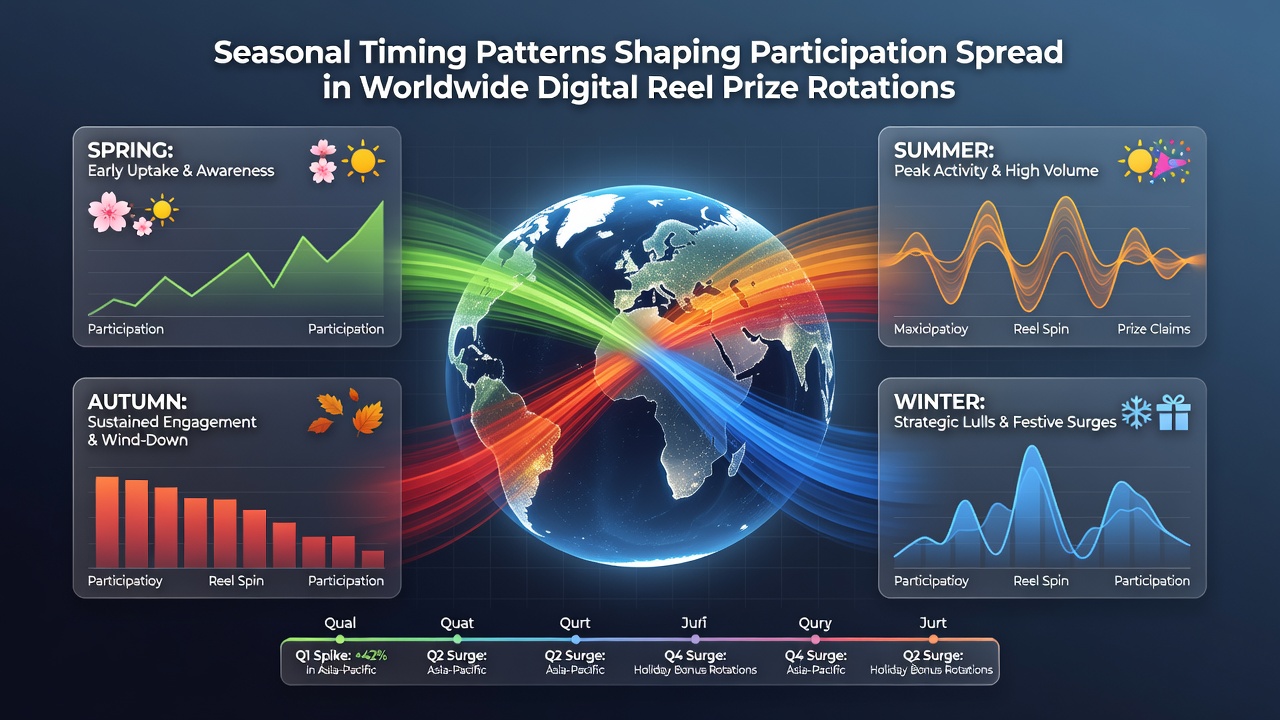
Digital reel events incorporate seasonal timing into their core mechanics through rotating prize tiers that activate at specific calendar points, and studies from gaming research institutions show these adjustments influence not just volume but also the geographic spread of active participants. For instance, one analysis of 2025-2026 event logs found that leaderboard competitions timed with major regional holidays drew entries from 18 additional countries on average compared to off-peak rotations. What's significant is how volatility in symbol patterns interacts with these timing choices, since platforms use data to match game features with expected user availability during different seasons.
Industry organizations such as the European Gaming and Betting Association have documented similar correlations in their annual summaries, noting that coordinated global events benefit when organizers stagger start dates to align with local seasonal peaks rather than forcing uniform schedules. This approach reduces server strain while maximizing cross-border involvement in prize draws.
Conclusion
Seasonal timing patterns continue to determine how participation spreads through worldwide digital reel prize rotations, with evidence from multiple sources confirming that calendar awareness leads to more even global engagement. Operators who integrate these insights into scheduling maintain steadier entry flows year-round, and ongoing data collection in 2026 supports further refinements in rotation strategies across regions.